Recovery Is More Than Sobriety: Addressing Codependency, Relationships, and Family Systems at Hudson Valley Collective
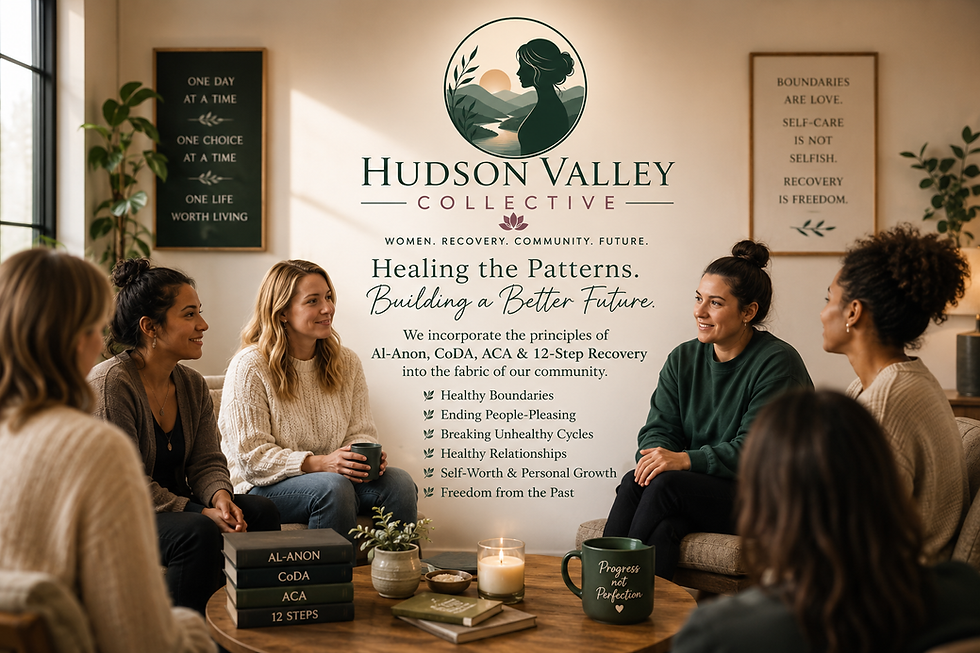
For many women, recovery is not just about putting down a substance. It is about understanding the patterns, beliefs, and relationships that may have contributed to emotional pain long before drugs, alcohol, food, or other coping mechanisms entered the picture.
At Hudson Valley Collective, we recognize that many women arrive carrying much more than a substance use disorder. They often bring histories of unhealthy relationships, people-pleasing behaviors, boundary violations, childhood trauma, family dysfunction, emotional dependency, and a deep-rooted tendency to place the needs of others ahead of their own.
That is why recovery at Hudson Valley Collective extends beyond traditional addiction recovery and incorporates principles found in Al-Anon, Co-Dependents Anonymous (CoDA), Adult Children of Alcoholics (ACA), and other Twelve-Step fellowships focused on emotional wellness and healthy relationships.
Looking Beyond the Substance
Many women discover that while substances may have been the symptom, the underlying challenges often involve relationships.
Some residents have spent years trying to rescue, fix, control, or manage the lives of others. Others have struggled with setting healthy boundaries, choosing emotionally unavailable partners, remaining in abusive relationships, or losing their sense of identity within a relationship.
These patterns do not simply disappear when someone gets sober.
In many cases, they become more visible.
Recovery requires learning not only how to stop harmful behaviors but also how to create healthy connections with others and with oneself.
Weaving Recovery Principles Into Daily Life
At Hudson Valley Collective, the principles of Al-Anon, CoDA, and related recovery fellowships are woven into the fabric of everyday living.
Residents are encouraged to explore concepts such as:
Healthy boundaries
Personal accountability
Emotional regulation
Self-worth and self-esteem
Detachment with love
Relationship patterns
Family systems dynamics
Trauma-informed recovery
Communication skills
Healthy conflict resolution
These discussions happen organically throughout the day—in house meetings, peer support sessions, community activities, and one-on-one conversations.
Recovery becomes something that is lived, not simply discussed.
Learning to Choose Differently
One of the most powerful aspects of recovery is learning that we do not have to repeat the same patterns.
Many women begin to recognize recurring themes in their lives:
Attracting unhealthy partners
Remaining in toxic relationships
Avoiding conflict at all costs
Seeking validation from others
Sacrificing personal needs to gain approval
Confusing caretaking with love
Feeling responsible for everyone else's emotions
Through education, peer support, Twelve-Step work, and self-reflection, residents begin developing the awareness necessary to make different choices.
The goal is not perfection.
The goal is progress.
Building Healthy Relationships With Ourselves
Before healthy relationships with others can flourish, women must often learn how to develop a healthy relationship with themselves.
This means learning to:
Trust their instincts
Honor personal boundaries
Practice self-care without guilt
Develop confidence and independence
Accept imperfections
Prioritize emotional wellness
Recognize their own value apart from what they do for others
These lessons become the foundation for lasting recovery.
A Community That Understands
Healing rarely occurs in isolation.
Living alongside other women who share similar experiences creates opportunities for honesty, accountability, support, and growth. Residents quickly discover they are not alone in their struggles, and that many of the challenges they face are shared by others walking similar paths.
Through fellowship, connection, and shared experience, women learn that recovery is about much more than abstinence.
It is about building a life worth living.
At Hudson Valley Collective, we believe true recovery happens when women learn not only how to stay sober, but how to create healthier relationships, healthier boundaries, and healthier lives.
Because freedom isn't just recovering from a substance.
It's recovering from the patterns that kept you stuck in the first place.
Hudson Valley Collective Through community, we heal.Helping women build lives rooted in recovery, connection, self-worth, and lasting wellness.
Comments